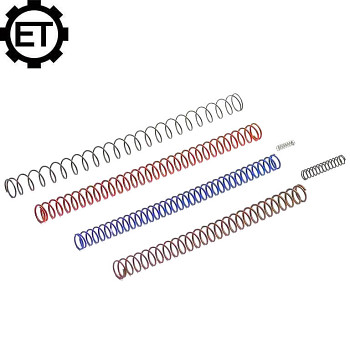
You cannot do without springs
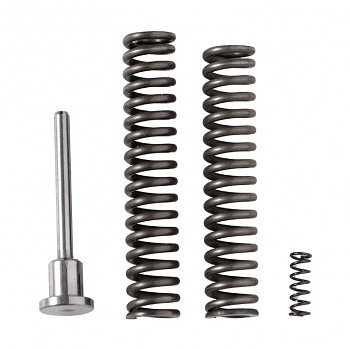
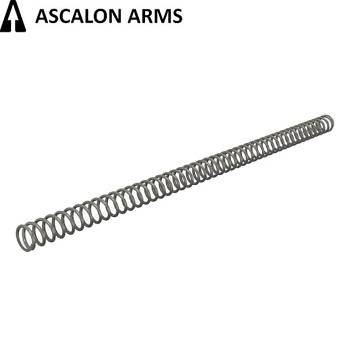
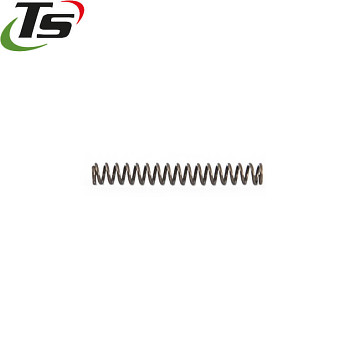
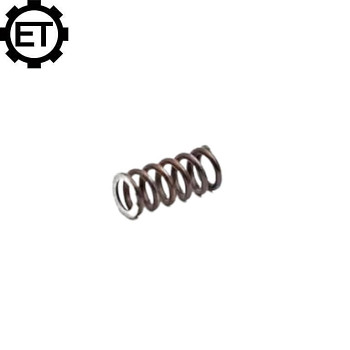
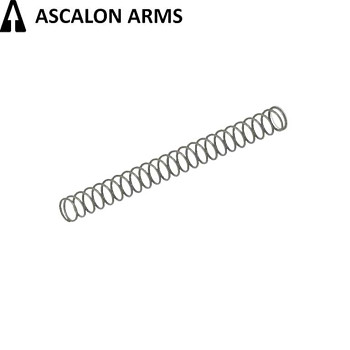
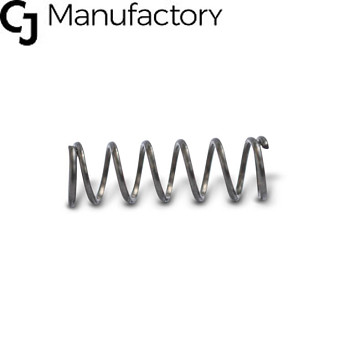
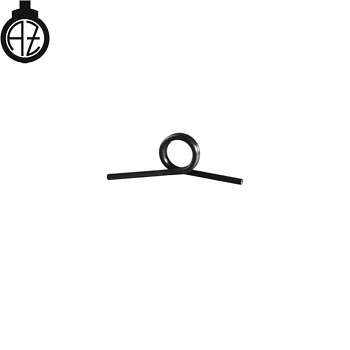
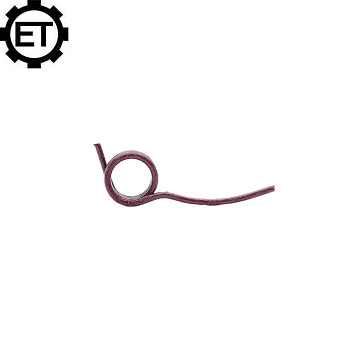
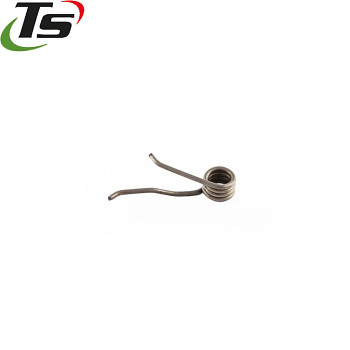
Springs are the basis of the internal mechanism of pistols and long guns. In this category, you will find springs from renowned manufacturers such as Eemann Tech, Ascalon Arms or Zendl.
Which springs you can choose from
Springs affect a number of processes in the operation of a firearm. They can wear out or break, and then they need replacement for purely service reasons. By choosing a different spring stiffness, however, you can also adapt the behavior of the firearm to your needs. In our offer, you will find springs for all cases.
Recoil springs:
They affect the cycling of the slide and the perception of recoil. The recoil spring ensures that the slide returns to the forward position after a shot, picking up a new cartridge along the way and feeding it into the chamber.
What it means in practice and how to choose the optimal recoil spring
The strength of the spring affects how much the slide "beats" into the frame of the firearm.
A harder spring saves the frame by not letting the slide go back with such force during the shot. You will likely address this if you use stronger ammunition in the pistol (self-defense, duty pistols, cartridges with higher energy in sports shooting). Such cartridges could destroy the firearm over time, which is why shooters purchase a stronger spring.
Sports shooters more often choose lighter recoil springs. The firearm is easier to control and the action is smoother.
A lighter spring mitigates recoil.
A lighter spring may protect the frame less, but it saves you. The slide will not return to the forward position with such vigor and will not disturb your sights. The action of the firearm is smoother and more comfortable.
You will use this especially in the case of sports shooting if you use weaker ammunition and value every second.
A lighter spring facilitates manual racking.
With a lighter spring, you can rack the firearm much more easily. Shooters with less strength take advantage of this. Thanks to easier manipulation, you will also resolve various malfunctions more quickly under stress during competitions.
The recoil spring is a key element for the reliable operation of the firearm.
The slide must reach the rear position with sufficient force to eject the shell casing. A spring that is too strong in combination with weaker ammunition can cause the casing to fail to eject in time or to get jammed in the ejection port. On the other hand, you can recognize a spring that is too light by the fact that the shell casings fly very far. This means that the pistol is wearing out excessively due to strong impacts.
The recoil spring then pushes the slide back to the forward position and must pick up a cartridge along the way. A spring that is too strong will push it there under almost any circumstances, but it may damage the cartridge. More often, it happens that a weaker spring does not overcome the resistance of the cartridge and the slide fails to go into battery.
Which recoil spring is best for me?
Focus your selection of the recoil spring mainly on what ammunition you use. A spring that is too strong can bring problems with ejecting the shell casing and will cause the muzzle of the firearm to dip as the slide returns forward, preventing you from immediately aiming for the next shot.
On the other hand, a weak spring does not dampen the movement of the slide sufficiently, and the firearm suffers more. The slide may also lack sufficient vigor to return to the forward position.
Main springs
The main spring propels the hammer against the firing pin. If it does not have sufficient force, the firearm will not fire. The force of the main spring also determines how much force you must exert to pull the trigger.
A main spring that is too weak increases the probability of firearm failure
If you replace the spring with one that is too weak, it will be very easy to pull the trigger (it will not offer resistance), but it may happen that it will not have enough energy to ignite the cartridge primer and the shot will not occur at all.
When to get a lighter main spring?
Sports shooters often tune their firearms to have the smoothest action possible and allow for fast and accurate shooting. Replacing the main spring with a lighter one contributes to this. A weaker main spring facilitates the first shot in DA mode, where you cock the hammer with the trigger.
For sports shooting, 11 lbs - 12 lbs springs are best suited, as they improve the trigger pull but still have enough force to reliably fire the firearm.
Lighter springs are then combined with a longer firing pin and ammunition with soft primers. If you have a firearm for self-defense or duty purposes, the standard main spring strength (13 lbs - 16 lbs) represents a reliable choice with absolute certainty that you will ignite any cartridge.
Lighter trigger springs
The trigger spring takes care of returning the trigger to its original position and determines the actual resistance you feel during the trigger pull. Unlike the main spring, it has no effect on the ignition of the cartridge.
Why install a lighter trigger spring?
You will simply achieve a smoother trigger movement. Lower resistance of the internal mechanism will allow you to better concentrate on aiming.
Lighter trigger springs are purchased by sports shooters to improve shooting results for pistols such as the CZ Shadow 2, CZ TS 2, as well as for rimfire rifles like the CZ 457.