For long-range rifle shooting, whether it is sporting or tactical shooting or hunting, you likely want to use a scope. This is installed on the firearm using rings. One criterion for selection is the diameter of the scope. But it does not end there; for the scope to function well, you need to find rings exactly for you.
Whether you will handle the optics comfortably will be largely influenced by the method of attaching the rings to the firearm. What exactly should you focus on when choosing rings? Should you get a picatinny rail, or is it unnecessary for you? We will explain everything step by step.
2 ways of attaching the rings
There are many types of rings – one-piece, two-piece, quick-release, with various inclinations, and even with additional rails for a red dot.
1. Dovetail mount
In this case, the rings are mounted directly onto the receiver of the firearm, usually using screws. The rings for each firearm are specific, as the dimensions and shape of the dovetail differ between individual models.
When to use dovetail mount of rings
-
When you want the simplest attachment system possible.
-
You need to attach a scope and not deal with the mount anymore.
-
You own one of the older CZ models (for example, older CZ rimfire rifles, including CZ Brno, CZ 452, and others) for which a picatinny rail is not manufactured. Even though a rail intended for new models would theoretically fit, it would cover the ejection port, which is located in a slightly different place on older models. In that case, the only option left is to mount two separate rings on the dovetail, which remains the same for both older and newer models.
Advantages of dovetail mount
-
reliability
-
simplicity of the device
-
low weight
Disadvantages of dovetail mount
-
limited selection of mounts (no possibility to choose inclination, attachment, or height)
-
impossibility to install a mount with a QD lever
-
without additional mounts for a red dot
2. Mounting on a picatinny rail
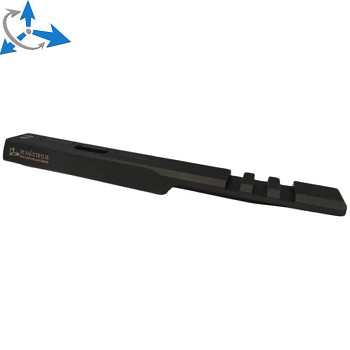
The picatinny rail is a mount with standardized slot dimensions, giving you wide possibilities for installing optics and tactical accessories. If your firearm does not have one from the factory, it can usually be installed additionally.
Advantages of mounting on a picatinny rail
-
versatility – you can use the same rings on any firearm with a picatinny interface
-
various mount heights
-
various quick-release (QD) mechanisms
-
various inclinations
-
choice between one-piece rings and two separate rings
Disadvantages of mounting on a picatinny rail
-
higher axis above the barrel
-
more parts – picatinny rail, mount, scope – more joints that can loosen or become misaligned
-
higher weight of the entire mechanism than just separate rings
Picatinny rail as a universal mount
The greatest advantage of the picatinny rail lies in its versatility. Many different accessories can be attached to it. Some firearms have it directly from the factory (certain types of CZ 457 and CZ 600), and on many others, the rail can be additionally installed as an aftermarket accessory.
In our offer, you can choose from rails for these models:
-
CZ 457
-
CZ 600
-
CZ 455
-
ZKM 452 & ZKM 456
-
ZKM 452
-
ZKM 451
When to get a picatinny rail
If you want to use a scope with a quick-release system, you cannot do without a picatinny rail. The picatinny rail expands your options for choosing the type of rings. When is it definitely worth installing it on your firearm?
-
if you want mount rings with simple attachment
-
you alternate scopes and other optics
-
you own multiple firearms
-
you are looking for maximum variability
-
you want additional tactical accessories
-
you shoot at longer distances and therefore deal with rail inclination
Do I really need a picatinny rail?
Like everything, the picatinny rail has characteristics that might not be advantageous for you. Although shooters have become very fond of the wide spectrum of options that picatinny rails offer, they may not necessarily suit your specific needs.
When considering whether to acquire a picatinny rail, consider the following factors:
-
The picatinny rail increases the scope's axis above the barrel.
-
A more complex mechanism naturally carries the risk of a joint loosening, resulting in the loss of zero.
-
Higher weight of the entire system.
-
It may be unnecessary for your needs – you shoot at shorter distances, do not need to swap scopes, or do not use tactical accessories.
You might find useful
If you are looking for the best solution for your CZ 600 or 457, do not miss the following links, which will help you with your decision and also provide a practical perspective:

![Scope rings [picatinny type]](https://www.cz-parts.com/deploy/img/tree/972/rifle_mounts_picatinny.png "Scope rings [picatinny type]")
![Scope rings [dovetail type]](https://www.cz-parts.com/deploy/img/tree/702/scope mounts_dovetail.jpg "Scope rings [dovetail type]")
![Scope bases [picatinny rails]](https://www.cz-parts.com/deploy/img/tree/841/rails.jpg "Scope bases [picatinny rails]")
![ZKM 452, ZKM 456 steel scope base [picatinny rail] | 16mm dovetail](https://www.cz-parts.com/deploy/img/products/3960/tn_3960.jpg "ZKM 452, ZKM 456 steel scope base [picatinny rail] | 16mm dovetail")
![ZKM 452 steel scope base [picatinny rail] | 11mm dovetail](https://www.cz-parts.com/deploy/img/products/3958/tn_3958.jpg "ZKM 452 steel scope base [picatinny rail] | 11mm dovetail")
![ZKM 451 steel scope base [picatinny rail] | 16mm dovetail](https://www.cz-parts.com/deploy/img/products/3959/tn_3959.jpg "ZKM 451 steel scope base [picatinny rail] | 16mm dovetail")
![CZ Brno Combo scope mount [dovetail] | 30mm](https://www.cz-parts.com/deploy/img/products/2255/tn_2255.jpg "CZ Brno Combo scope mount [dovetail] | 30mm")
![CZ Brno Combo scope mount [dovetail] | 1"](https://www.cz-parts.com/deploy/img/products/2248/tn_2248.jpg "CZ Brno Combo scope mount [dovetail] | 1\"")
![CZ 600 scope base [picatinny rail] - Mini](https://www.cz-parts.com/deploy/img/products/2930/tn_2930.jpg "CZ 600 scope base [picatinny rail] - Mini")
![CZ 600 scope base [picatinny rail] - Medium | 25 MOA](https://www.cz-parts.com/deploy/img/products/2873/tn_2873.jpg "CZ 600 scope base [picatinny rail] - Medium | 25 MOA")
![CZ 600 scope base [picatinny rail] - Medium](https://www.cz-parts.com/deploy/img/products/2872/tn_2872.jpg "CZ 600 scope base [picatinny rail] - Medium")
![CZ 600 scope base [picatinny rail] - Long](https://www.cz-parts.com/deploy/img/products/2933/tn_2933.jpg "CZ 600 scope base [picatinny rail] - Long")
![CZ 457, CZ 600, CZ Scorpion, CZ Bren 2 QD scope rings [picatinny] | short base [115.4mm]](https://www.cz-parts.com/deploy/img/products/3929/tn_3929.jpg "CZ 457, CZ 600, CZ Scorpion, CZ Bren 2 QD scope rings [picatinny] | short base [115.4mm]")
![CZ 457, CZ 600, CZ Scorpion, CZ Bren 2 QD scope rings [picatinny] | long base [145.4mm]](https://www.cz-parts.com/deploy/img/products/3930/tn_3930.jpg "CZ 457, CZ 600, CZ Scorpion, CZ Bren 2 QD scope rings [picatinny] | long base [145.4mm]")
![CZ 457, CZ 600, CZ Scorpion, CZ Bren 2 QD scope rings [picatinny]](https://www.cz-parts.com/deploy/img/products/3928/tn_3928.jpg "CZ 457, CZ 600, CZ Scorpion, CZ Bren 2 QD scope rings [picatinny]")
![CZ 457, CZ 600 scope rings [picatinny] | 30mm](https://www.cz-parts.com/deploy/img/products/3053/tn_3053.jpg "CZ 457, CZ 600 scope rings [picatinny] | 30mm")
![CZ 457, CZ 600 scope rings [picatinny] | 30mm](https://www.cz-parts.com/deploy/img/products/5461/tn_5461.jpg "CZ 457, CZ 600 scope rings [picatinny] | 30mm")
![CZ 457, CZ 600 scope rings [picatinny] | 1"](https://www.cz-parts.com/deploy/img/products/5483/tn_SCOPE_RINGS_FOR_WEAVER___MEDIUM___30mm.jpg "CZ 457, CZ 600 scope rings [picatinny] | 1\"")
![CZ 457, CZ 600 scope rings with screw nut [picatinny] | 30mm](https://www.cz-parts.com/deploy/img/products/3396/tn_3396.jpg "CZ 457, CZ 600 scope rings with screw nut [picatinny] | 30mm")
![CZ 457, CZ 600 QD scope rings [picatinny]](https://www.cz-parts.com/deploy/img/products/5037/tn_5037.jpg "CZ 457, CZ 600 QD scope rings [picatinny]")
![CZ 457, CZ 455, CZ 512 scope rings [dovetail] | 30mm](https://www.cz-parts.com/deploy/img/products/2254/tn_2254.jpg "CZ 457, CZ 455, CZ 512 scope rings [dovetail] | 30mm")
![CZ 457, CZ 455, CZ 512 scope rings [dovetail] | 1"](https://www.cz-parts.com/deploy/img/products/2251/tn_2251.jpg "CZ 457, CZ 455, CZ 512 scope rings [dovetail] | 1\"")
![CZ 457 steel scope base [picatinny rail] | left hand 25 MOA](https://www.cz-parts.com/deploy/img/products/3927/tn_3927.jpg "CZ 457 steel scope base [picatinny rail] | left hand 25 MOA")
![CZ 457 steel scope base [picatinny rail] | left hand](https://www.cz-parts.com/deploy/img/products/3455/tn_3455.jpg "CZ 457 steel scope base [picatinny rail] | left hand")
![CZ 457 steel scope base [picatinny rail] | 35 MOA](https://www.cz-parts.com/deploy/img/products/3551/tn_3551.jpg "CZ 457 steel scope base [picatinny rail] | 35 MOA")
![CZ 457 steel scope base [picatinny rail] | 25 MOA](https://www.cz-parts.com/deploy/img/products/3550/tn_3550.jpg "CZ 457 steel scope base [picatinny rail] | 25 MOA")
![CZ 457 steel scope base [picatinny rail] | 20 MOA](https://www.cz-parts.com/deploy/img/products/3619/tn_cz_457_picatinny_rail_jkn.jpg "CZ 457 steel scope base [picatinny rail] | 20 MOA")
![CZ 457 steel scope base [picatinny rail] | 15 MOA](https://www.cz-parts.com/deploy/img/products/3618/tn_CZ_457_STEEL_PICATINNY_RAIL_JKN___35_MOA.jpg "CZ 457 steel scope base [picatinny rail] | 15 MOA")
![CZ 457 steel scope base [picatinny rail]](https://www.cz-parts.com/deploy/img/products/2871/tn_2871.jpg "CZ 457 steel scope base [picatinny rail]")
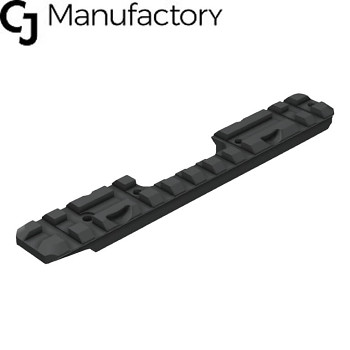
![CZ 457 scope base [picatinny rail] | 25 MOA](https://www.cz-parts.com/deploy/img/products/2260/tn_2260.jpg "CZ 457 scope base [picatinny rail] | 25 MOA")
![CZ 457 scope base [picatinny rail]](https://www.cz-parts.com/deploy/img/products/2261/tn_2261.jpg "CZ 457 scope base [picatinny rail]")
![CZ 455 scope base [picatinny rail] | 25 MOA](https://www.cz-parts.com/deploy/img/products/2477/tn_2477.jpg "CZ 455 scope base [picatinny rail] | 25 MOA")
![CZ 455 scope base [picatinny rail]](https://www.cz-parts.com/deploy/img/products/2259/tn_2259.jpg "CZ 455 scope base [picatinny rail]")